
Home / Pantry Guides / Food Safety
Food Safety
What the science actually says about canned food
 The Goode Foods Family • November 2, 2026 • 5 min read
Science
Not
Marketing
Share this guide
Glass fragments Home canning Commercial canning Cans vs. jars Our cans FAQ
No, glass isn’t automatically safer. Food in glass and food in cans can both be safe when it’s properly processed. But glass can chip, crack and break, and the CDC’s biggest canning warning is about improperly home-canned vegetables, not the cans at the grocery store. Commercially canned vegetables go through a controlled heat process made for long-term storage, and metal cans don’t shatter, block light and hold up during shipping.
Some of y’all have been convinced that food in glass jars is automatically safer than food in metal cans.
WHO TOLD YOU THAT? 🤔
Let’s talk about what the science actually says.
Glass fragments are recognized as a legitimate food safety hazard. This isn’t us talking. The FDA’s own hazard guidance says glass inclusion can happen whenever processing uses glass containers.
Glass containers can chip, crack or break during manufacturing, transportation and handling. And small fragments can end up in food without being immediately noticed.
That’s the part that matters. Most food in a jar gets eaten with very little handling, so there aren’t many chances to spot a tiny piece of glass before it ends up on a fork.
A lot of the glass-is-safer talk comes from the mason jar on Grandma’s shelf. And look, we love Grandma. But here’s what the CDC says.
Although botulism is rare, the CDC warns that improperly home-canned vegetables are a major source of botulism outbreaks. In fact, the CDC says home-canned vegetables are the most common cause of botulism outbreaks in the United States.
Why vegetables? Because green beans, corn and other low-acid vegetables need specific pressure-canning procedures. The CDC says pressure canning is the only recommended method for low-acid foods, and a regular boiling water bath won’t protect against botulism.
Getting the process wrong can have serious consequences.
So the jar on the counter isn’t what makes food safe. The process is.
Canning at home? Use a pressure canner and a tested recipe for green beans, corn and other low-acid vegetables, and get your pressure gauge checked every year. Your local extension office can help.
Commercially canned vegetables are a whole different process. They’re produced using controlled thermal processing designed to make food safe for long-term storage.
In the U.S., the FDA has specific rules for low-acid canned foods like vegetables and beans, covering how they’re heated, sealed and checked. It’s not a guess on a stovetop. It’s a tested process, every batch.
And here’s a bonus most people don’t know: that process cooks the food right in the can. That’s why canned vegetables are already cooked and ready to eat. We even built a whole 3-day no-cook meal plan around it.
It’s also why a pot of corn chowder or a pan of potatoes and green beans comes together so fast on a weeknight.
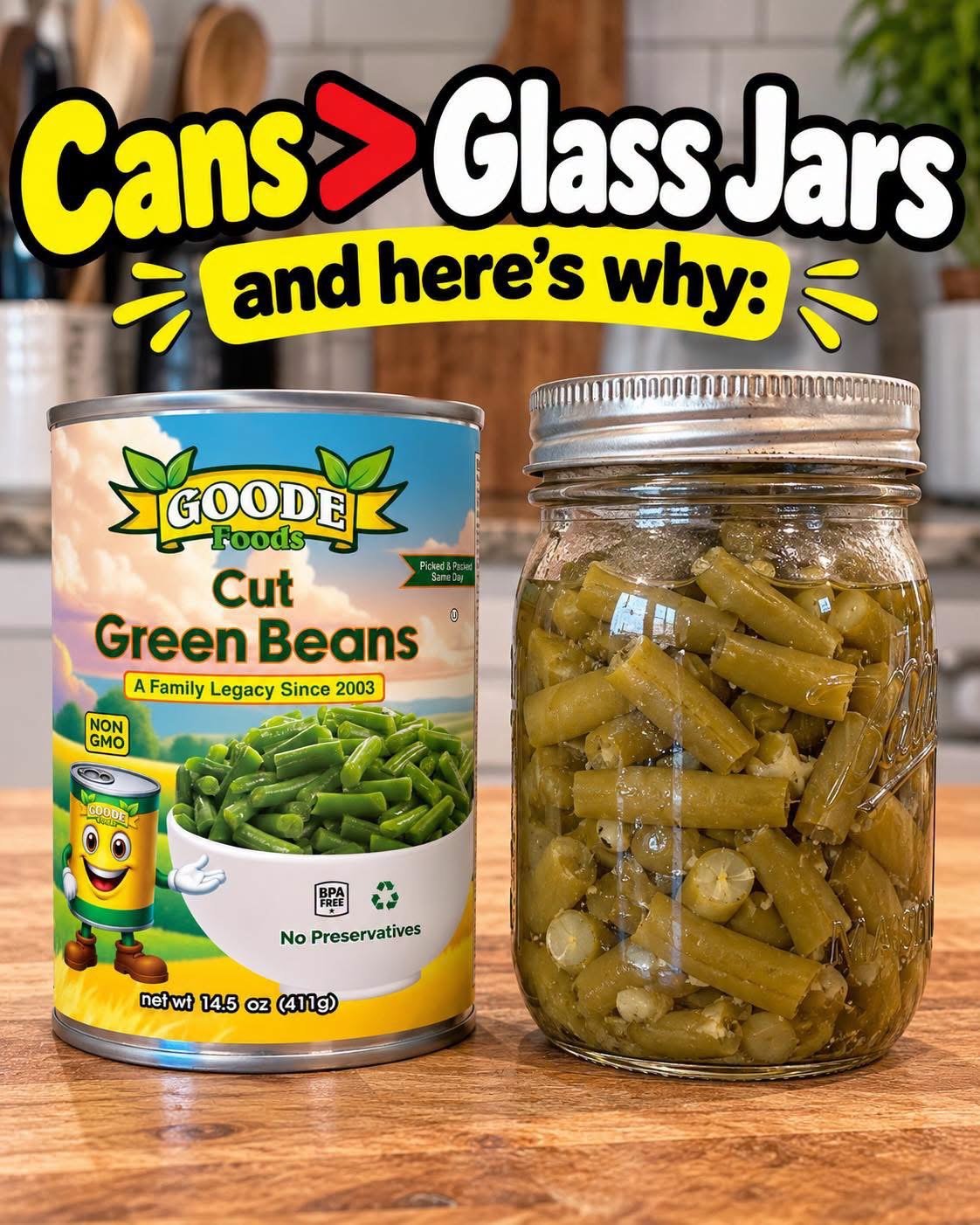
Metal cans don’t shatter like glass jars. They block light. They’re durable, stackable and built to protect food during transportation and storage. Even the ridges on the can are there to make it stronger. Here’s the whole story on those ridges.
| Metal cans | Glass jars | |
|---|---|---|
| Dropped on the floor | Might dent | Can shatter |
| Light | Blocks it completely | Clear glass lets it in |
| Shipping and stacking | Durable and stackable | Needs more padding |
| Risk of glass pieces | None | Can chip or crack |
| Recyclable | Yes | Yes |
| Reusable for home canning | No | Yes |
Fair is fair. Glass has its place. But when it comes to getting food from the farm to your pantry in one piece, cans were built for the job.
For generations, families have depended on canned vegetables to put food on their tables. Modern canning technology has continued to evolve.
Our family has been doing this since 2003. Our vegetables and beans are non-GMO, picked and packed the same day, and sealed in BPA-free cans.
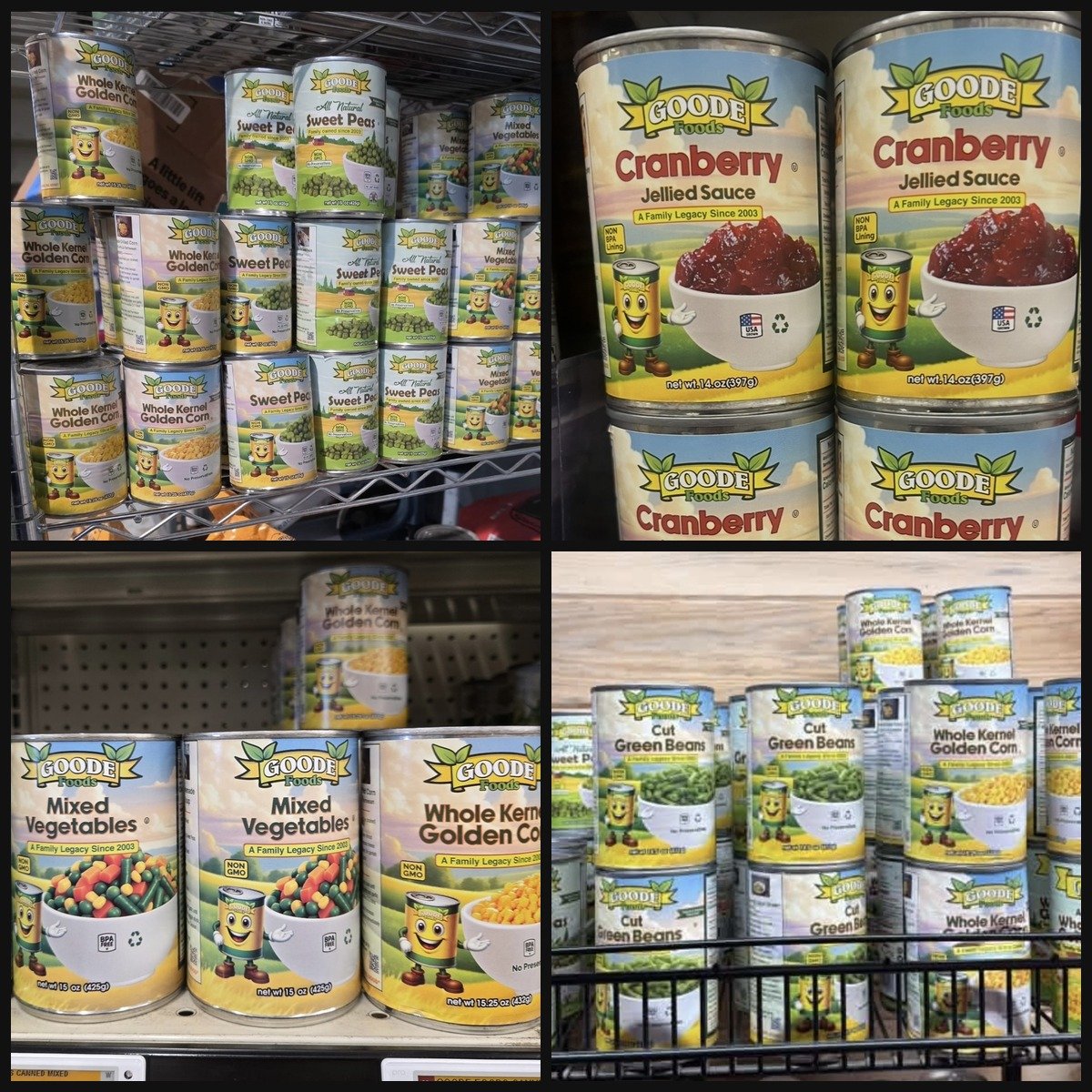
Find Goode Foods canned vegetables and beans at Target, Walmart, Meijer, Hy-Vee, Jewel-Osco, Shaw’s, Star Market and Food Lion. Items vary by store.
Not automatically. Food in glass jars and food in metal cans can both be safe when the food is properly processed. Cans have some practical advantages: they don’t shatter, they block light, and they hold up well during shipping and storage. Glass can chip, crack or break, and the FDA recognizes glass fragments as a food safety hazard.
Yes. Commercially canned vegetables go through a controlled heat process designed to make them safe for long-term storage on the shelf. In the U.S., the FDA regulates how low-acid canned foods like vegetables and beans are processed. Skip any can that is bulging, leaking or badly dented.
Green beans, corn and other vegetables are low-acid foods. The CDC says home-canned vegetables are the most common cause of botulism outbreaks in the United States, and that pressure canning is the only recommended method for low-acid foods. A boiling water bath won’t protect against botulism.
Yes. A metal can is completely opaque, so light can’t reach the food inside. Clear glass jars let light through.
Yes. Goode Foods uses BPA-free cans.
Yes. Canned vegetables and beans are cooked during the canning process, so you can heat them up or eat them straight from the can.
No. The heat process and the sealed can do the preserving. Goode Foods canned vegetables are made with no preservatives.
Goode Foods canned vegetables and beans are sold at Target, Walmart, Meijer, Hy-Vee, Jewel-Osco, Shaw’s, Star Market and Food Lion. Items vary by store, so use the store locator on goodefoodsfamily.com to find them near you.
There’s nothing wrong with properly preserved food in glass jars.
But the idea that glass automatically means safer and cans automatically mean unhealthy?
That’s marketing, not science.
Sometimes the packaging people have been taught to fear has advantages they’ve never bothered to investigate.
EAT GOODE = FEEL GOOD. 🥫
Sources: CDC on home-canned foods and botulism; FDA Hazards Guide on glass inclusion; FDA rules for low-acid canned foods (21 CFR Part 113); Clemson Cooperative Extension on handling canned goods.
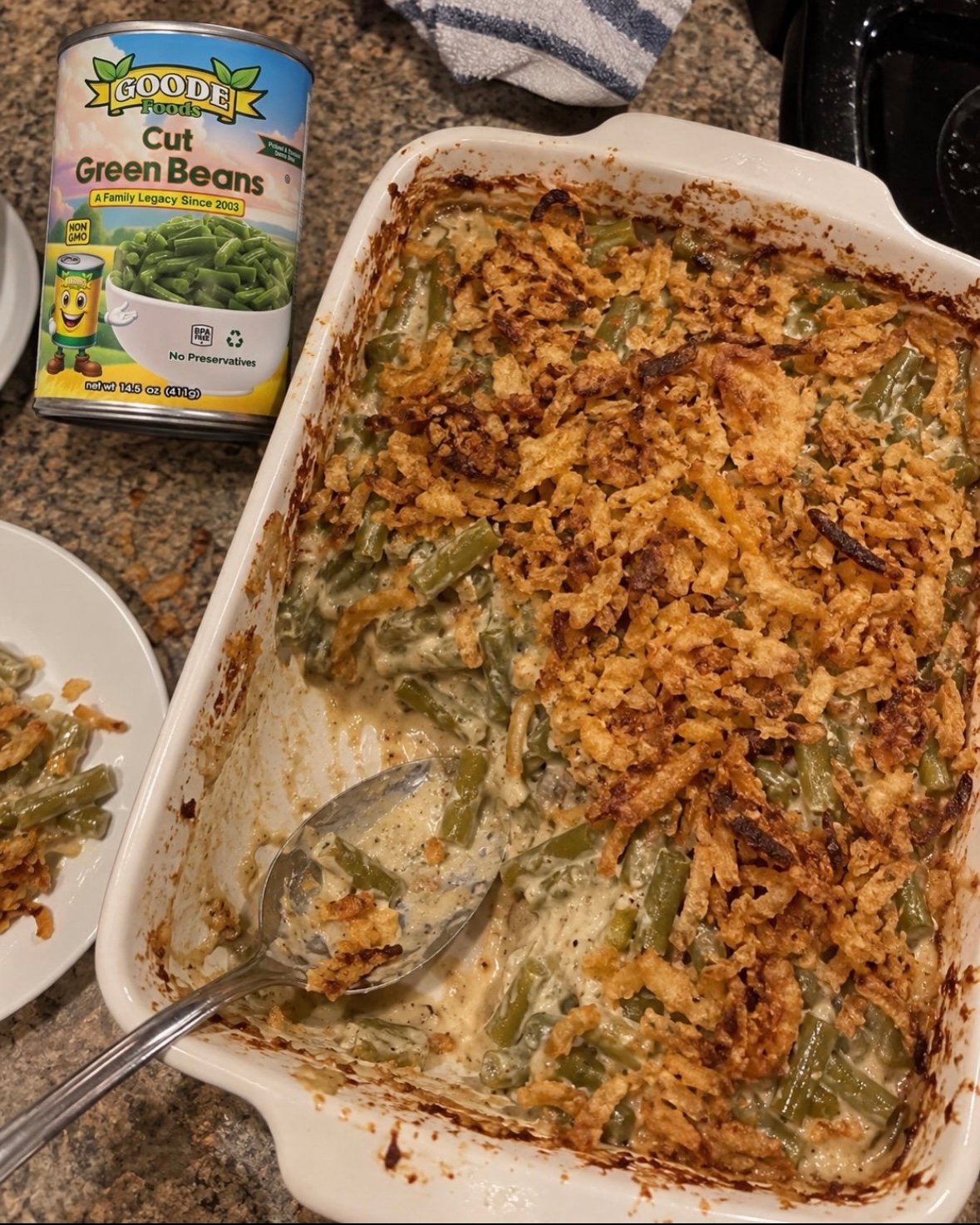
Canned green beans are already cooked, so stop cooking them twice. Why they taste flat, 9 ways to make them exciting, and…
33 countries now tell households to keep emergency food at home. Here’s how much you actually need, what to buy, and why…