
Home / Pantry Guides / Kitchen Smarts
Kitchen Smarts
The canned goods aisle deserves an apology
 The Goode Foods Family • November 16, 2026 • 9 min read
Our
Flabbers
Are Gasted
Share this guide
Cost Nutrition Sodium Food waste Shelf life Food safety Emergencies The verdict FAQ
Canned vegetables hold their own against fresh and frozen. In a Michigan State University analysis, frozen corn, green beans and peas cost 81% to 103% more than canned per edible cup, and canned green beans scored higher than both fresh and frozen on the study’s vitamin index. Canned vegetables are already cooked, need no refrigerator or freezer before opening, keep for years on the shelf and help families waste less food.
Fresh vegetables get all the praise. Frozen vegetables get treated like the healthier alternative. Meanwhile, canned vegetables have been quietly winning on convenience, nutrition, shelf life and food waste.
OUR FLABBERS ARE GASTED.
Somewhere along the way, fresh vegetables became royalty. Frozen vegetables earned a medical degree. And canned vegetables got treated like the embarrassing cousin at Thanksgiving dinner.
We’re still trying to figure out who made these rules.
Because when you actually compare canned corn, green beans and sweet peas against their fresh and frozen counterparts, the conversation gets a whole lot more interesting.
And we have research to back it up.
At Goode Foods, we’re obviously biased toward canned vegetables. We’ve built our family business around them.
But we’re also big believers that families deserve facts instead of grocery-store stereotypes.
So let’s settle one of the biggest debates in the grocery aisle.
| Canned | Frozen | Fresh | |
|---|---|---|---|
| Cost per edible cup (green beans, MSU study) | $0.67 | $1.22 | Varies by season |
| Needs a fridge or freezer before opening | No | Yes, freezer | Usually, fridge |
| Works during a power outage | Yes | Not for long | Not for long |
| Already cooked | Yes | Usually blanched, not fully cooked | No |
| Prep needed | Open, drain, season | Thaw or cook | Wash, trim, cook |
Let’s start with the grocery bill because that’s where families feel the difference.
A Michigan State University research analysis compared common vegetables sold fresh, frozen and canned.
And the results were interesting.
In that historical comparison:
Those percentages reflect the products and prices studied, not a universal difference or today’s supermarket prices.
But they challenge the idea that canned vegetables are somehow the inferior choice.
Now, we’re not going to pretend every can of vegetables costs the same. Different brands have different quality standards, sourcing practices, packaging and prices.
And we’re certainly not going to tell you that every canned vegetable costs less than a dollar.
That’s not how grocery shopping works.
But when comparing the cost per edible serving, canned vegetables have demonstrated a meaningful affordability advantage in published research.
And there’s another cost people rarely consider.
The money you spend on vegetables you never actually eat.
We’ll get to that in a minute.
We really need to retire the idea that canned vegetables somehow lose their nutritional value the moment they’re sealed.
That’s not how nutrition works.
Fresh vegetables can begin losing certain nutrients after harvest. Transportation, storage, light, oxygen and cooking can all influence their nutritional content.
Frozen vegetables are often processed shortly after harvest, which helps preserve many nutrients.
And canned vegetables?
Commercial canning preserves important nutrients, including minerals and fiber, while making vegetables convenient to store and eat.
A Michigan State University analysis measured vitamin intake relative to calories across fresh, frozen and canned vegetables.
Here’s what researchers found:
Yes. Canned green beans actually came out ahead on that particular nutritional measure.
Not every vegetable. Not every vitamin. But enough to challenge the idea that fresh and frozen automatically win.
Corn, green beans and sweet peas also provide useful nutrients in all three forms.
Contributes fiber and carotenoids such as lutein and zeaxanthin. Why it matters: lutein and zeaxanthin collect in the part of your eye that handles sharp, central vision and help filter harsh blue light. The fiber keeps digestion regular and helps you stay full longer.
Provide fiber and nutrients including vitamin K. Why it matters: your body needs vitamin K for blood clotting and healthy bones. The fiber supports healthy digestion and cholesterol.
Provide fiber, plant protein and several vitamins and minerals.
The exact amounts vary with processing, preparation and serving size.
And yes, heat-sensitive nutrients such as vitamin C can decrease during canning.
But that doesn’t erase the nutrients that remain.
Fresh doesn’t automatically mean more nutritious. Frozen doesn’t automatically mean more nutritious. And canned certainly doesn’t mean nutritionally inferior.
That’s a perception problem, not a scientific rule.
This is the one we hear the most.
First, a reality check. Your body actually needs sodium. The American Heart Association says your body needs a small amount, less than 500 mg a day, to function properly.
Salt isn’t the enemy. Too much salt is. The AHA recommends no more than 2,300 mg a day for adults, with 1,500 mg as the ideal target for most adults.
So the real question isn’t whether there’s salt in a can. It’s how much ends up on your plate.
And you control a lot of that.
Drain it. Rinse it. Done.
Researchers at the University of Tennessee found that draining canned beans cut sodium by 36%, and draining plus rinsing cut it by 41%. Draining and rinsing canned vegetables washes away sodium that’s sitting in the liquid too.
Want even less? Our sweet peas are No Salt Added. Check the label on any can and pick what fits your family.
One more thing nobody mentions. The salt shaker on your table and the seasoning packet in your takeout don’t come with a nutrition label. Your can does.
Let’s talk about something that happens in kitchens everywhere.
You go grocery shopping on Sunday.
You buy fresh green beans.
Maybe some corn.
Maybe a bag of fresh peas because this is apparently the week you’re going to become the person who cooks fresh vegetables every night.
You put everything neatly in the refrigerator.
Monday gets busy.
Tuesday, somebody wants something different for dinner.
Wednesday, you order takeout.
Thursday, you completely forget those vegetables exist.
By Saturday, you finally remember.
You open the refrigerator, pull out the vegetables and discover they’ve started a new life form in the back of the produce drawer.
Congratulations.
You just paid full price to manufacture compost.
And now you’ve lost the vegetables, the money you spent on them and the time it took to shop for them.
Not to mention the additional garbage.
This is one of the most overlooked advantages of canned vegetables.
You can buy canned corn, green beans and peas today without having to plan your entire week around eating them before they spoil.
They can sit safely in your pantry, unopened and properly stored, until you’re ready to use them.
Frozen vegetables can help reduce waste too, but they require freezer space and electricity.
Canned vegetables don’t.
And that matters more than people realize.
Because the most affordable vegetable isn’t necessarily the one with the lowest price tag.
It’s the one you actually get to eat.
Here’s one advantage fresh vegetables simply cannot match.
An unopened, properly stored can of low-acid vegetables can maintain good quality for 2 to 5 years, according to USDA food safety guidance.
Exact best-quality dates vary by product and manufacturer, so always follow the packaging guidance.
Fresh green beans, sweet peas and corn generally have much shorter storage windows, depending on how they’re handled and refrigerated.
Frozen vegetables last longer when properly frozen, but they still require continuous freezer storage.
Canned vegetables?
No freezer required.
No refrigerator required before opening.
No thawing.
No planning dinner around which vegetables are about to spoil.
No discovering that the fresh green beans you purchased earlier in the week have already gone bad.
And commercially canned vegetables are already cooked during processing.
For many products, that means you can open the can, drain or rinse if desired, season and serve.
Sometimes convenience is part of eating well.
And sometimes it’s the difference between making dinner at home and spending more money ordering something else.
Food waste is more than an inconvenience.
It’s a financial issue.
It’s an environmental issue.
And it’s a household planning issue.
Think about everything that goes into growing, harvesting, transporting and selling vegetables.
The water. The land. The labor. The fuel. The packaging.
Now imagine all those resources being used to produce food that never gets eaten.
Fresh vegetables can be wonderful, but they come with a clock.
Frozen vegetables help reduce spoilage too, provided they remain properly frozen.
Canned vegetables offer another advantage: long-term pantry storage without refrigeration.
You can purchase canned corn, green beans and sweet peas ahead of time, keep them available for meals and use them when your family is ready.
And because they’re already prepared, there’s often less trimming and preparation waste.
That doesn’t mean canned food can never be wasted. Once opened, leftovers still need to be refrigerated promptly and used safely.
But the ability to keep unopened vegetables in your pantry for months or years can make meal planning considerably easier.
And fewer vegetables spoiling in your refrigerator means fewer vegetables ending up in the garbage.
We’re not saying every household will achieve zero food waste by purchasing canned vegetables.
But reducing preventable waste is a pretty compelling reason to keep them around.
This is where the conversation gets especially interesting.
Fresh, frozen and canned vegetables can all be part of a healthy diet. And all three are subject to food safety standards.
But the way they’re processed is different.
Fresh vegetables generally aren’t commercially sterilized. They may be exposed to contamination during growing, harvesting, processing, transportation or preparation.
Freezing slows microbial growth, but it does not reliably destroy all harmful microorganisms.
Commercial canning uses controlled heat processing and hermetically sealed containers to produce shelf-stable foods.
That means properly processed canned vegetables are designed to remain commercially sterile while the container stays intact.
That’s a meaningful food safety advantage.
An intact, properly processed can is a protective barrier against outside contamination. And unlike fresh or frozen vegetables, it doesn’t need a continuous cold chain from the plant to your pantry.
And it’s one reason canned vegetables don’t require refrigeration before opening.
Does that make canned vegetables completely immune to contamination?
Of course not.
Canned foods aren’t immune to recalls. Manufacturing failures, damaged seals and improper handling can create risks. Fresh produce can be perfectly safe, and frozen vegetables are safe when properly handled and prepared according to package instructions.
But we think consumers deserve to understand the difference between food that’s refrigerated, food that’s frozen and food that’s commercially sterilized in a sealed container.
A freezer preserves food. A properly executed commercial canning process makes food shelf-stable through heat processing and a protective seal.
Those are not the same thing.
Ever notice that our vegetable cans use traditional ends that require a can opener?
That’s intentional.
We prefer the conventional can-end format for our vegetables.
A traditional can end is secured by a double seam, while an easy-open end includes a scored opening and pull-tab mechanism.
Both designs can be manufactured to meet food safety requirements.
However, the scored areas and rivets on easy-open lids are additional features that must be carefully manufactured, handled and inspected.
Food safety guidance specifically identifies damage around pull-tab score lines and rivets as conditions requiring attention.
We prefer the simplicity of our traditional can-end design and the protection of a properly formed, intact seal.
That doesn’t mean every pull-tab can is unsafe or that traditional cans cannot be damaged.
In fact, any can with bulging, leaking, severe dents, damaged seams or other evidence of compromised integrity should not be used.
A tiny cosmetic dent is not necessarily dangerous, but damage affecting the seal is another matter.
Our position is simple.
The integrity of the package matters just as much as what’s inside it.
And we’d rather consumers understand that than assume every can is identical.
If you’ve ever experienced a hurricane, extended power outage, winter storm or unexpected emergency, you already know why shelf-stable food matters.
A freezer full of vegetables is useful until the electricity goes out.
Fresh produce can spoil quickly when refrigeration isn’t available.
But properly stored, unopened canned vegetables can remain shelf-stable without electricity.
That’s a major advantage for emergency food storage.
Consider what a pantry stocked with canned corn, green beans and peas offers:
And during an emergency, having food that doesn’t require a freezer or stove can make a real difference.
Of course, emergency preparedness also requires safe drinking water, appropriate food storage and a way to open the cans.
But when people ask us whether canned vegetables are good for emergency food storage, our answer is simple: yes. It’s one of the strongest reasons to keep them in your pantry. Our emergency food supply list shows exactly how much to keep on hand.
Not everybody lives near a grocery store with a large fresh produce section.
Not everybody has extra freezer space.
Not everybody can shop multiple times per week.
And not everybody has the time to wash, trim, chop and cook vegetables from scratch every evening.
That’s reality.
Canned vegetables offer an accessible way for families to keep vegetables available without constantly returning to the grocery store.
They’re convenient for busy parents. Useful for college students. Practical for older adults. Helpful for families preparing for emergencies. And valuable for households managing grocery budgets.
You don’t need an expensive refrigerator, a large freezer or a picture-perfect kitchen to eat vegetables.
You need access to food that works for your household.
Canned vegetables keep nutritious ingredients on hand year-round, between grocery trips and out of season. And because they last so long unopened, stocking up when there’s a sale actually makes sense.
That’s what we’ve always believed.
Let’s be practical for a minute.
Some nights, nobody wants to spend 45 minutes preparing vegetables.
You want dinner.
You want something nutritious.
And preferably, you want to eat before everybody in the house starts asking when the food will be ready.
That’s where canned corn, green beans and sweet peas come in.
Goes straight into chili, soups, casseroles, cornbread recipes and rice dishes.
Can be seasoned and served as a side dish or added to casseroles and one-pot meals. Here’s how to make them taste amazing.
Work well in soups, pasta dishes, pot pies and mixed vegetable recipes.
No washing, peeling or trimming. That’s true for most canned vegetables.
No waiting for frozen vegetables to thaw when a recipe calls for it.
No emergency trip to the grocery store because the vegetables you planned to cook are no longer usable.
And because canned vegetables are already cooked, many meals require little more than heating and seasoning.
Healthy eating doesn’t have to be complicated to count.
Sometimes the smartest ingredient is the one that’s already waiting in your pantry.
For convenience, shelf stability, emergency preparedness and reducing the risk of unused produce spoiling at home, canned vegetables have compelling advantages.
For affordability, published research has found meaningful savings for canned corn, green beans and peas compared with frozen versions, although current prices vary.
For nutrition, the research shows that canned vegetables can be comparable to fresh and frozen, and some canned vegetables outperform their counterparts on specific nutritional measures.
For food safety, properly processed commercial canned foods offer the advantage of commercial sterility and sealed, shelf-stable packaging.
Fresh and frozen vegetables have advantages too. Fresh vegetables may provide preferred textures and higher amounts of certain heat-sensitive vitamins. Frozen vegetables can preserve nutrients well and offer convenient storage.
We’re not suggesting families should stop eating fresh or frozen vegetables.
We’re saying the canned goods aisle has been underestimated for far too long.
And if we’re comparing vegetables based on what families actually care about (nutrition, affordability, convenience, waste and reliability), canned vegetables have earned their place as a first choice, not a last resort.
We’re a family-owned food company. Of course we’re biased.
But we’re not interested in selling families the idea that healthy eating has to be expensive, complicated or inconvenient. We believe vegetables should be accessible, and families should be able to stock their pantries with confidence.
Find Goode Foods corn, green beans and sweet peas at Target, Walmart, Hy-Vee, Jewel-Osco, Shaw’s, Star Market and Food Lion. Items vary by store.
We believe a can of vegetables deserves to be judged by its nutritional value, quality and usefulness rather than an outdated stereotype.
Fresh vegetables have their place. Frozen vegetables have their place. And canned vegetables deserve a whole lot more respect than they’ve been getting.
Commercial canning has been preserving food for more than 200 years. Generations of families have relied on canned foods for convenience and reliability.
And despite all that, people still act like vegetables become unhealthy the moment they’re put in a can.
Somewhere along the way, grocery shopping became a status competition.
We’d rather make it about feeding families.
The canned goods aisle deserves an apology.
And apparently a better public relations department.
Eat Goode. Feel Good.
Canned green beans can provide comparable nutrition to fresh or frozen green beans. One published comparison found canned green beans scored higher on a specific vitamin-intake-per-calorie measure, although other nutrient levels vary by processing method.
Canned and frozen corn both provide fiber and beneficial nutrients. Differences in specific vitamins, sodium content and preparation mean neither is universally healthier.
Yes. Canned sweet peas provide fiber, plant protein and several vitamins and minerals. As with other canned vegetables, checking the sodium content can help consumers choose products that meet their dietary needs.
Your body needs some sodium to function, and the American Heart Association recommends no more than 2,300 mg a day for adults. Draining and rinsing canned beans has been shown to cut sodium by up to 41%, and draining and rinsing canned vegetables also removes sodium in the liquid. No Salt Added options, like Goode Foods Sweet Peas, are another choice.
They can be. Historical research found canned corn, green beans and peas cost less per edible cup than frozen versions. Current prices depend on brand, package size, store and promotions.
Some nutrients, particularly heat-sensitive vitamins, can decrease during canning. However, many minerals and fiber remain, and certain beneficial compounds may become more available after processing.
Commercially canned vegetables are generally already cooked and can be eaten without additional cooking when the product is ready to eat and the can is intact. Follow the product’s labeling and handling instructions.
Many commercially canned low-acid vegetables can maintain best quality for 2 to 5 years when unopened and stored properly. Check the manufacturer’s best-quality date and never use cans with signs of compromised integrity.
Yes. Unopened canned vegetables are shelf-stable and do not require electricity for refrigeration or freezing. They are a practical addition to emergency food supplies.
Both traditional and easy-open cans can be safe when properly manufactured and undamaged. Traditional ends and easy-open ends have different structural features, and damage to seams, scored areas or rivets can compromise package integrity.
Many commercially canned vegetables do not require chemical preservatives for shelf stability because heat processing and airtight sealing preserve the food. Always check the ingredient label for the specific product.
Yes. Their long unopened shelf life allows families to store vegetables until they’re needed, helping reduce spoilage associated with unused fresh produce.
Sources: Miller and Knudson (2014), American Journal of Lifestyle Medicine on nutrition and cost comparisons; Michigan State University (2012) on canned, frozen and fresh cost and nutrition data; USDA Economic Research Service on fruit and vegetable retail prices; USDA Economic Research Service (2024) on meeting recommendations for under $3 a day; USDA Food Safety and Inspection Service on freezing and food safety; USDA Food Safety and Inspection Service on shelf-stable food storage; American Optometric Association on lutein, zeaxanthin and eye health; NIH Office of Dietary Supplements on vitamin K; Mayo Clinic on the benefits of fiber; American Heart Association on how much sodium you need; Today’s Dietitian, University of Tennessee research on draining and rinsing canned beans; Smithsonian Magazine on the history of canning; Clemson Cooperative Extension on shelf life and damaged cans; U.S. Food and Drug Administration, CPG Sec. 520.200 on canned food seam defects; Canadian Food Inspection Agency on pull-tab score line and rivet defects.
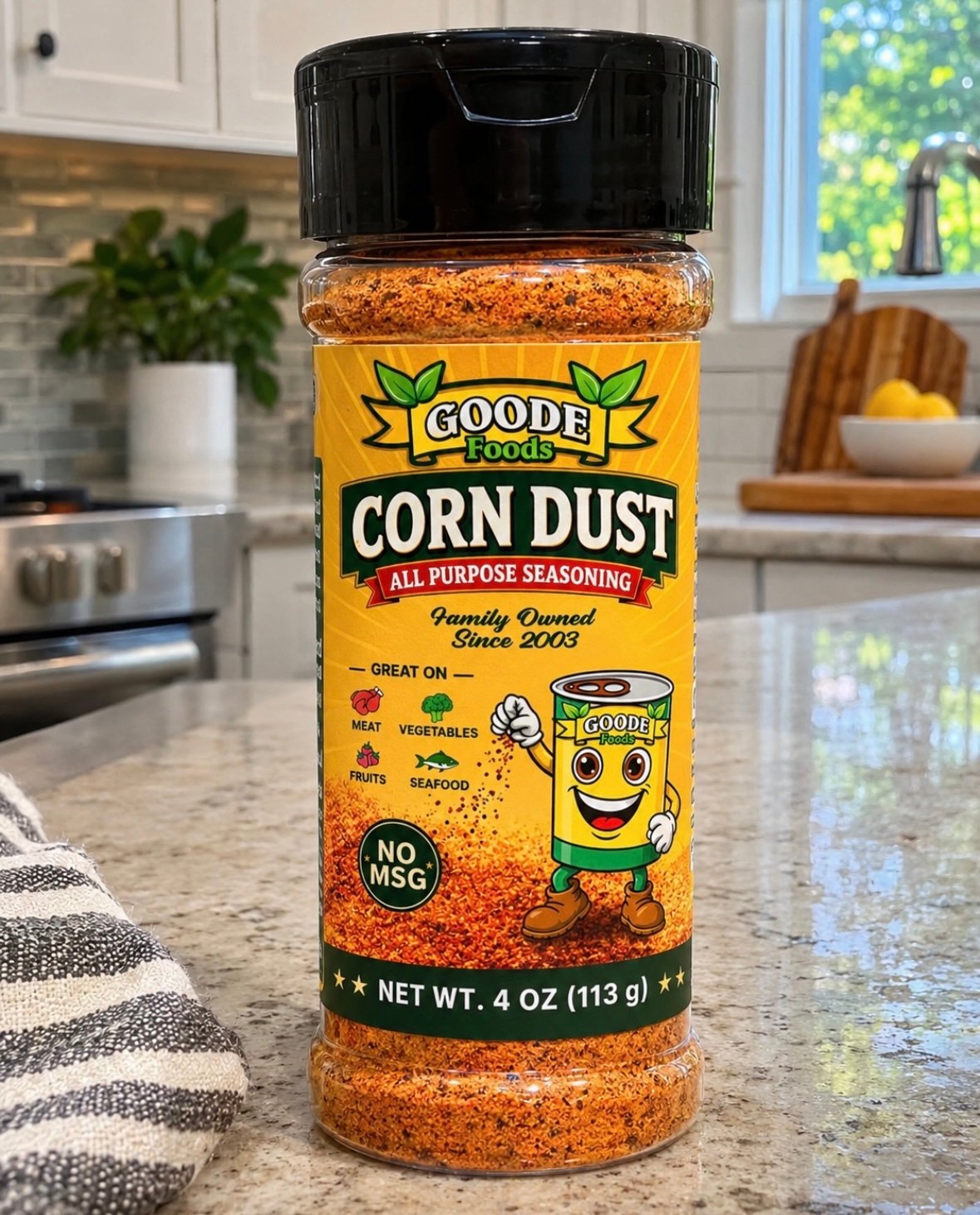
Canned food isn’t bland. The seasoning is. The 5-note flavor formula, a can-by-can cheat sheet and the one shaker that makes every…

How much food and water a family of 4 needs for 3 days, 2 weeks, 1 month or 3 months, with a…